Nihon Buyo (日本舞踊) is the general name for Japan's traditional dance. At its heart is the dance of Kabuki theatre, developed in the Edo period (1603–1868), together with influences from Noh, the refined kamigata-mai of Kyoto and Osaka, and new works created since the Meiji era.
Dancing the words
Most Nihon Buyo pieces express the words of a song through movement. A single dancer may become a young girl in love, a samurai, or the spirit of a lion. The lyrics are often written in old Japanese, so knowing the story beforehand makes the dance far easier to enjoy.
Four elements
- Furi (movement) — gestures that show the meaning of the lyrics. This is the core of the art.
- Music — performed live, mainly with the three-stringed shamisen, singers and a percussion-and-flute ensemble (hayashi). Styles include nagauta, tokiwazu, kiyomoto and gidayu.
- Costume and wig — chosen for each role. In su-odori the dancer performs in a plain formal kimono and hakama, with no costume at all.
- Props — above all the folding fan and the hand towel (tenugui). A closed fan can become a brush, a sword or a pipe; an open fan can become a sake cup, a letter, waves or the moon.
Mai and odori
Nihon Buyo is said to combine two kinds of movement: mai, calm and dignified, based on turning, and odori, lively and rhythmic, with jumps and stamping steps.
A short history
Japan's oldest chronicle, the Kojiki (712), already tells of a goddess dancing to lure the sun goddess out of a cave. In the early 1600s, Izumo no Okuni performed kabuki odori in Kyoto, the beginning of Kabuki. As Kabuki grew, its choreographers began teaching ordinary townspeople, and dance schools were born. After the Meiji era, dance performed independently of Kabuki came to be called Nihon Buyo.
Schools
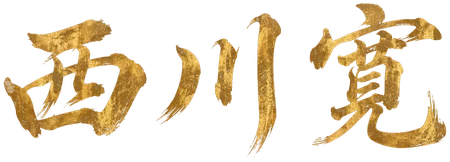
There are said to be more than 200 schools. The five largest, Nishikawa, Hanayagi, Fujima, Wakayagi and Bando, are known as the "five major schools". The Nishikawa school was founded around the turn of the 18th century by Nishikawa Senzo I and is one of the oldest. Its heads have choreographed many Kabuki classics, including Sagi Musume and Fuji Musume.